

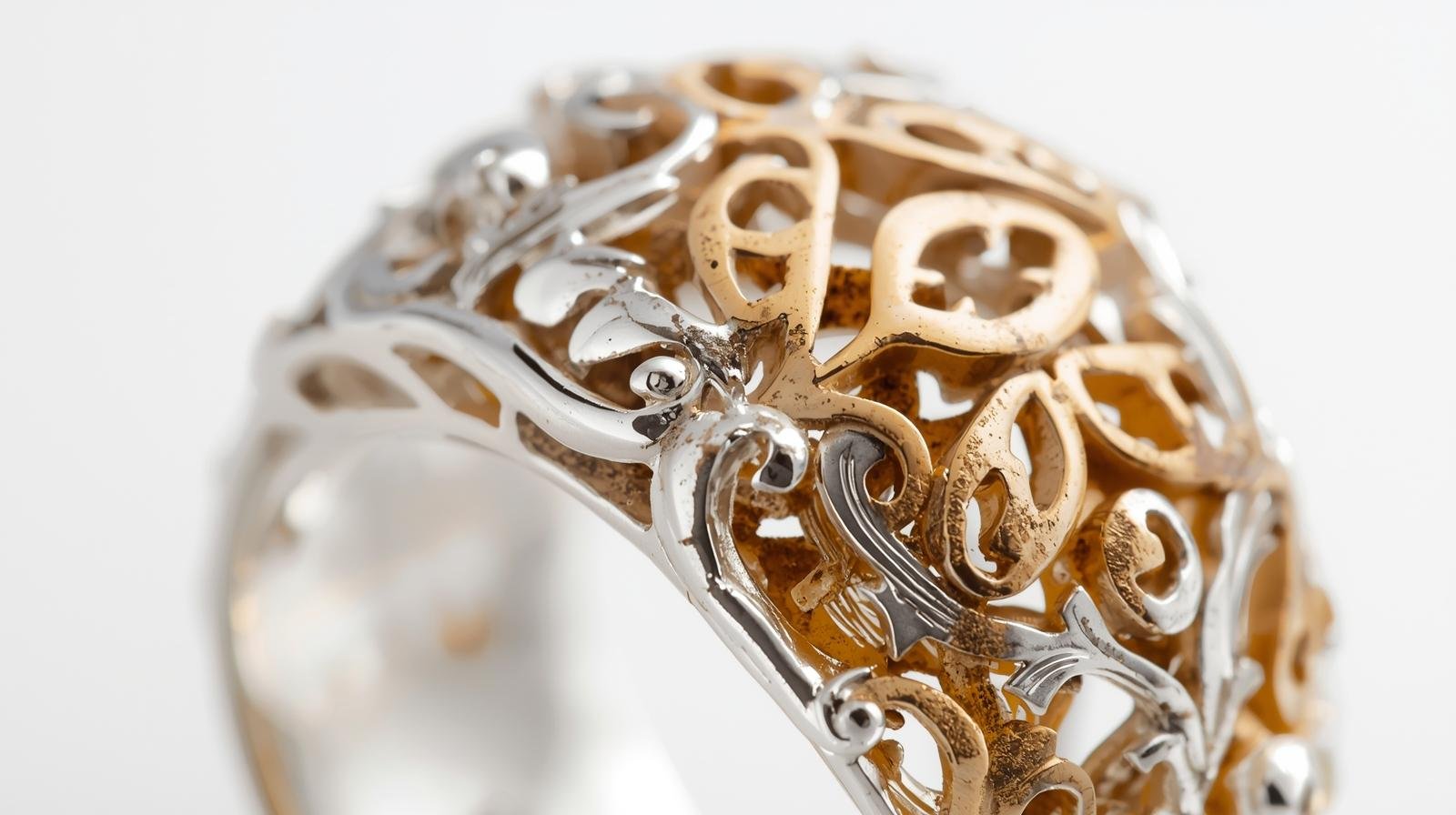
One of the most common jewelry care questions is:
Why does white gold turn yellow over time?
If your white gold ring or necklace has started developing a warmer tone, don’t worry. This is completely normal and part of how white gold is designed.
Understanding how white gold is made explains why this color change happens — and how to maintain its bright finish.
White Gold Is Not Naturally White
Pure gold in its natural form is intensely yellow. 24-karat gold is deep, rich, and unmistakably golden.
White gold does not exist in nature.
To create white gold, jewelers mix pure gold with other metals such as nickel, palladium, or silver. This reduces the purity to 18 karat or lower and softens the strong yellow tone into a pale, champagne-like color.
However, even after alloying, white gold is not bright white.
That bright finish comes from an additional step.
What Is Rhodium Plating?
To achieve the crisp, reflective white appearance associated with white gold jewelry, the piece is coated with rhodium plating.
Rhodium is a highly reflective, durable metal that enhances shine and gives white gold its clean, icy look.
This rhodium layer sits on the surface of the jewelry — it is not permanent.
Why Rhodium Wears Off Over Time
Rhodium plating naturally wears down due to:
- Daily friction
- Skin contact
- Hand washing
- Exposure to chemicals
- Regular wear and tear
Depending on craftsmanship and plating thickness, rhodium can last anywhere from one to five years.
Once it begins to wear away, the slightly warmer tone of the underlying white gold alloy becomes visible. This is often mistaken for “yellowing,” but in reality, it is simply the base color reappearing.
Does White Gold Always Need Maintenance?
Yes.
Because white gold is fundamentally yellow gold that has been alloyed and plated, it will always require periodic re-rhodium plating to maintain its bright white finish.
This is not a flaw. It is part of owning white gold.
High-quality jewelers control alloy composition and plating thickness carefully, which can significantly extend the lifespan of the rhodium layer.
With proper maintenance, white gold jewelry can remain beautiful for decades.
Is White Gold Still a Good Choice?
Absolutely.
White gold remains one of the most popular choices for:
- Engagement rings
- Wedding bands
- Diamond settings
- Fine jewelry collections
It offers a timeless aesthetic at a different price point than platinum, with similar visual appeal.
Understanding that white gold requires maintenance ensures you enjoy it without unrealistic expectations.
There is no such thing as naturally white gold — only expertly crafted white gold.
Frequently Asked Questions
1. How long does white gold rhodium plating last?
Rhodium plating typically lasts between one and five years, depending on wear and craftsmanship quality.
2. Is it normal for white gold to turn yellow?
Yes. When rhodium plating wears off, the underlying alloy may appear warmer in tone.
3. Can white gold be made permanently white?
No. White gold always requires rhodium plating to maintain a bright white finish.
4. How much does it cost to re-plate white gold?
Costs vary by jeweler and piece size, but re-rhodium plating is generally a routine maintenance service.
5. Does white gold damage easily?
White gold is durable, especially in 18-karat form, but like all fine jewelry, it benefits from proper care.
6. Is platinum better than white gold?
Platinum is naturally white and does not require plating, but it is typically more expensive and heavier.
7. How often should I service my white gold ring?
Most jewelers recommend inspection annually and re-plating when visible tone changes appear.