

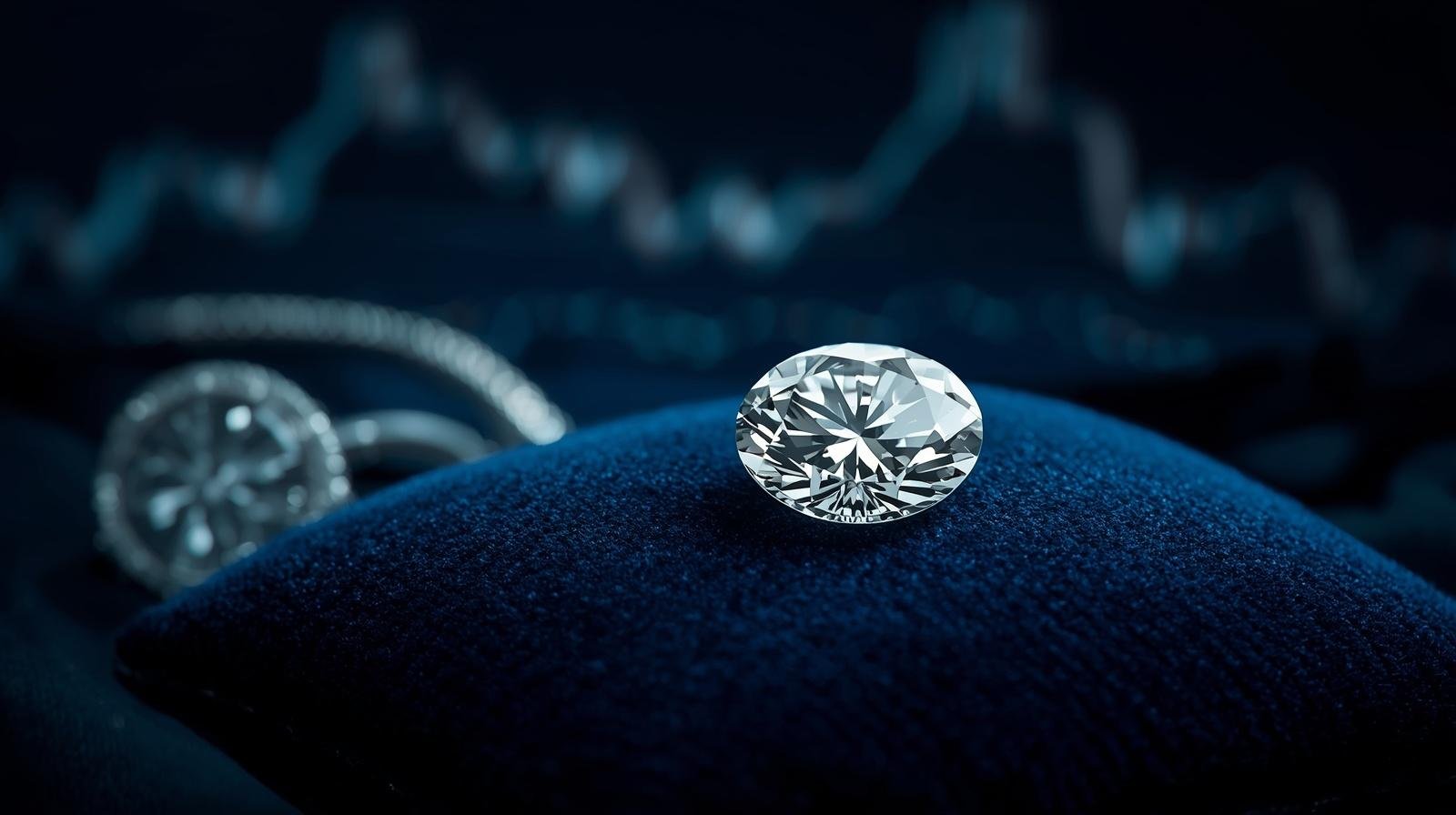
A question we hear often is: Are diamonds truly an investment, or simply a luxury purchase? The answer depends on what you buy and how you buy it.
A diamond can be a meaningful store of value, an heirloom passed through generations, or a stunning ring purchased on impulse. The difference lies in quality, rarity, certification, and intention.
What Makes a Diamond an Investment?
Not every diamond qualifies as an investment. To hold long-term value, a diamond must be:
- Rare and exceptional in cut, color, and clarity
- Backed by recognized certification
- Limited in supply, making it hard to replace or reproduce
High-quality diamonds are naturally scarce. This scarcity is what gives them long-term potential. Without rarity and certification, a diamond is simply luxury jewelry.
Certification is critical. It verifies authenticity, quality, and market value, which impacts resale potential and ensures the diamond can be passed down across generations.
Diamonds as a Store of Wealth
Unlike many luxury items, fine diamonds are:
- Portable and discreet
- Globally recognized
- Long-lasting in value and beauty
High-quality diamonds are sometimes referred to as “moving banks.” They can be inherited, preserved, and transferred, becoming tangible assets with both financial and emotional significance.
Luxury vs. Long-Term Value
A diamond purchased without attention to certification or rarity remains a luxury item. Beautiful, yes—but not necessarily valuable as an investment.
Conversely, a high-quality, certified diamond holds long-term worth. It offers emotional significance, generational legacy, and a tangible store of value.
The real question is not whether diamonds can be an investment—it’s whether the specific diamond you choose meets the criteria to make it one.
Frequently Asked Questions
1. Can all diamonds be considered investments?
No. Only diamonds with exceptional quality, rarity, and certification are suitable as investments.
2. How does certification affect diamond value?
Certification confirms authenticity, quality, and market value, ensuring confidence for resale or inheritance.
3. Are diamonds a safe long-term investment?
High-quality diamonds with proper certification tend to retain value, but market trends and rarity affect performance.
4. What makes a diamond rare?
Rarity depends on the combination of cut, clarity, color, and carat weight. Exceptional stones are limited in nature.
5. How does a diamond compare to other luxury investments?
Diamonds are portable, discreet, and globally recognized, often making them more versatile than other luxury items.
6. Can a diamond be inherited successfully?
Yes. Certified, high-quality diamonds are ideal for passing down as family heirlooms.
7. Does size alone determine a diamond’s investment potential?
No. Quality, rarity, and certification are far more important than size alone.